
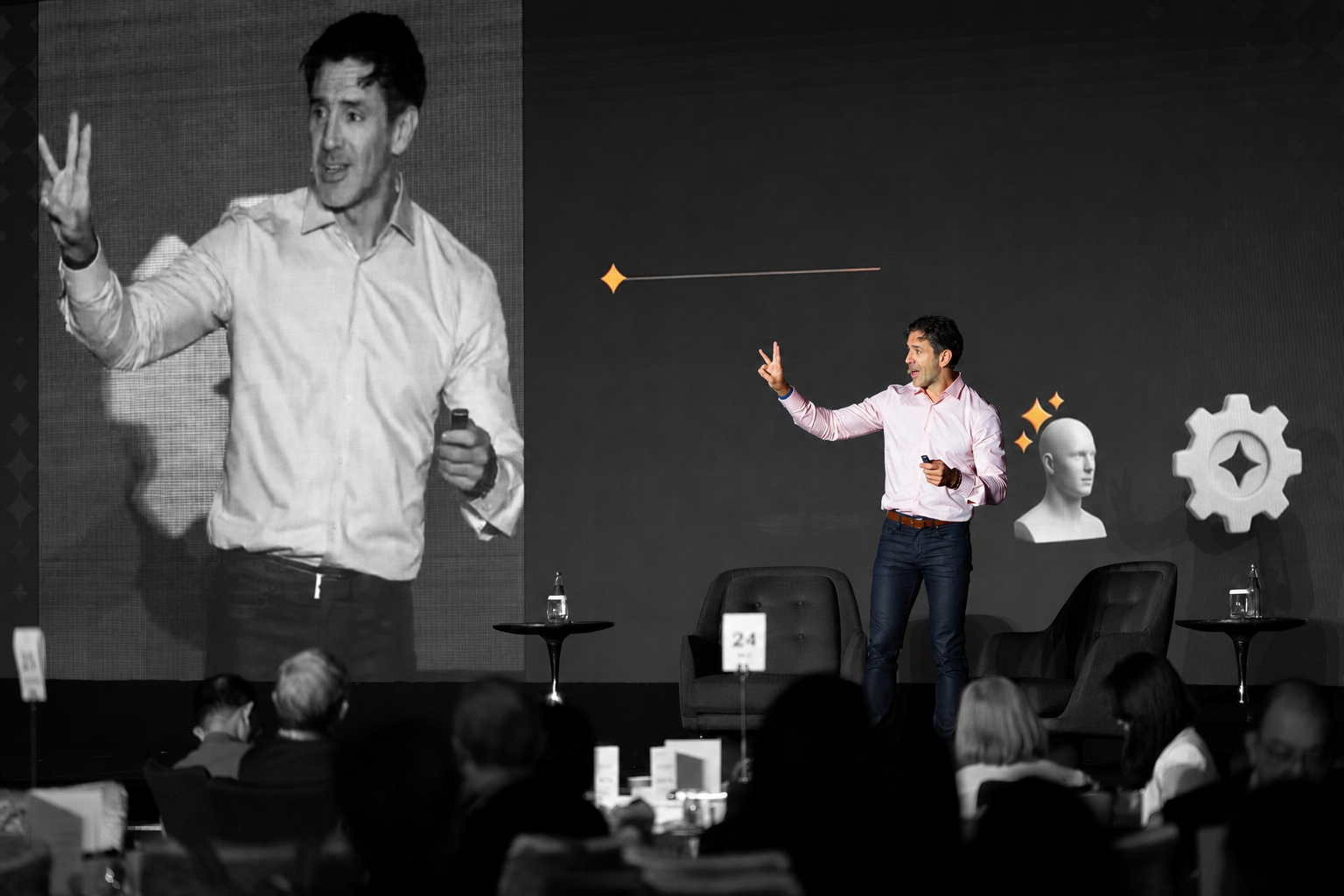
Click any lens. Each one is the same person, told a different way.
Twenty-five years reading rooms. Fifteen of them from inside the executive seat (CIO, CTO, CEO).
Before I was on stages, I was the person on the other side of those decisions. A CIO at eighteen. A CTO before most of my peers had finished their first internships. A strategy lead for Cisco's worldwide network of innovation centres. The former CEO of Axialent, with clients including Google, Microsoft, BBVA, P&G, and Booking.com. Currently CEO at Stoic Enterprises, building AI solutions for leadership development and team performance. I do not bring "five frameworks for the AI era" to a room. I bring fifteen years of executive scar tissue, translated.
What this gives an audience is rare. I can read what is actually happening on a senior team adopting AI: the careful politeness on top, the fear underneath, the quiet refusals, the leaders who are nodding without committing. I have been each of those people. I have also been the one who had to make the call.
Inside Cisco I was the intrapreneur who incorporated Lean Startup methodology into the company. That work became the protagonist of an IESE business case, published on the Harvard Business Publishing platform. Not a deck I borrowed. A practice I shipped.
When I speak about technology adoption, corporate innovation, or leading change through AI, I am pulling from the room I sat in, not from the slide I read.
Bringing this lens to a senior leadership offsite or keynote.
Engage me to speak →Three companies. Three eras. The same conviction running through all of them.
The reason I founded my first company, twenty-five years ago, was that I believed the quality of education could be improved with the right use of technology. We called it we-know.net. I have been founding things in the same direction ever since: technology in service of human formation, not the other way around.
we-know.net. Started before most schools had teachers with email addresses. Brought technology into elementary, junior high, high school, and college, at a time when even some of the top schools were resisting it.
Stoic Enterprises. An AI startup for leadership development. The same conviction, twenty-five years later, with the most powerful tooling humanity has ever produced.
The intrapreneur years. Inside Cisco I led the work that brought Lean Startup methodology into the company. That counts. The IESE business case on the Harvard Business Publishing platform documents it.
What this gives an audience is the practitioner's pattern recognition. I have raised money. I have shipped product. I have killed pet projects. When I talk about innovation, I am talking from the seat of the person who actually has to make the next thing exist.
Bringing this lens to a founders' summit, accelerator, or innovation offsite.
Engage me to speak →Twenty-five years of rooms.
Faculty at Duke Corporate Education and IESE New York. Recent rooms include MIT, a Fortune 500 sports and commerce HR leadership group, Qatar Foundation, Telus Digital, and MAP Philippines. The combination underneath, the executive, the founder, the family psychologist, is what makes this not look like a typical AI keynote.
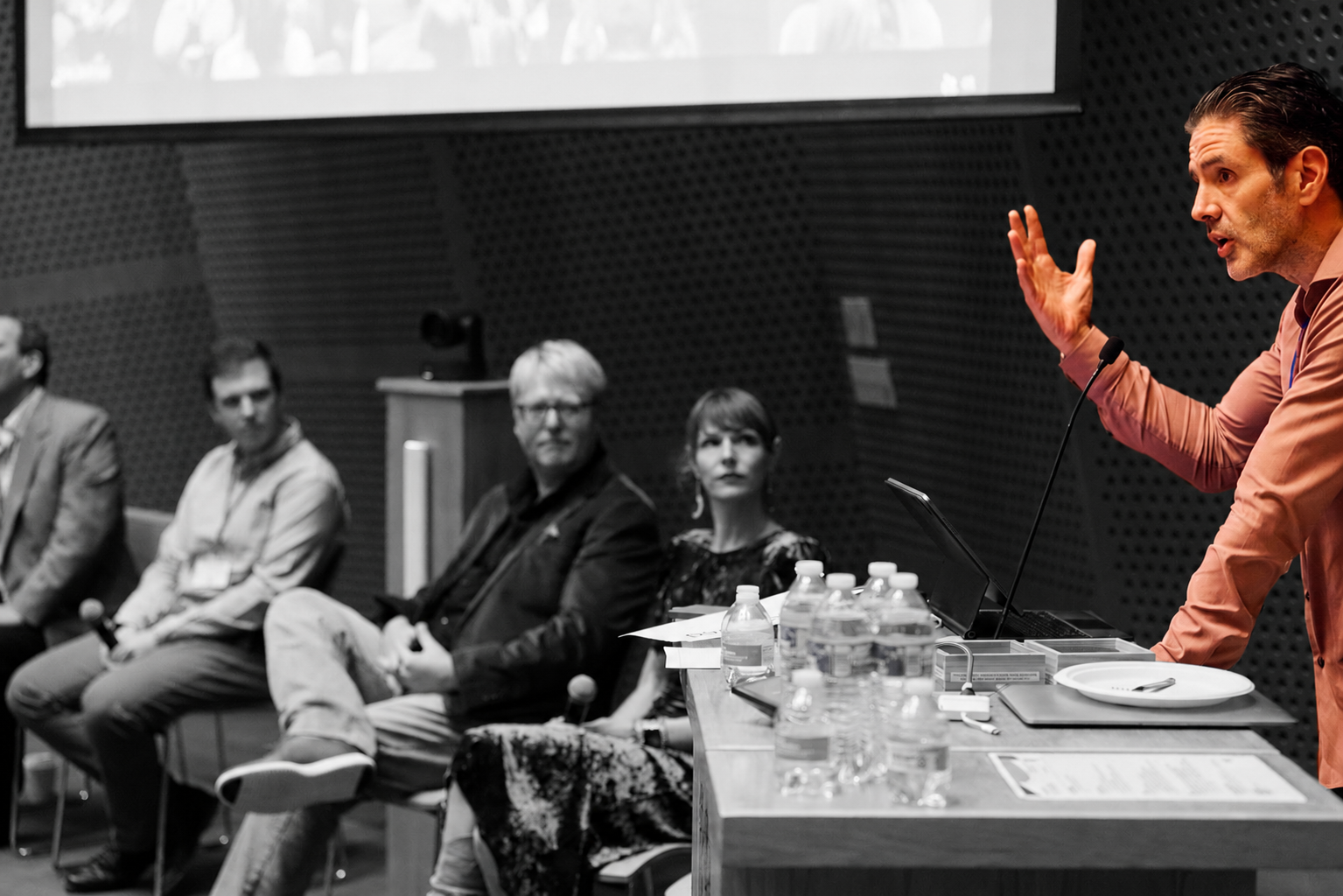
MIT · Cambridge · 2025
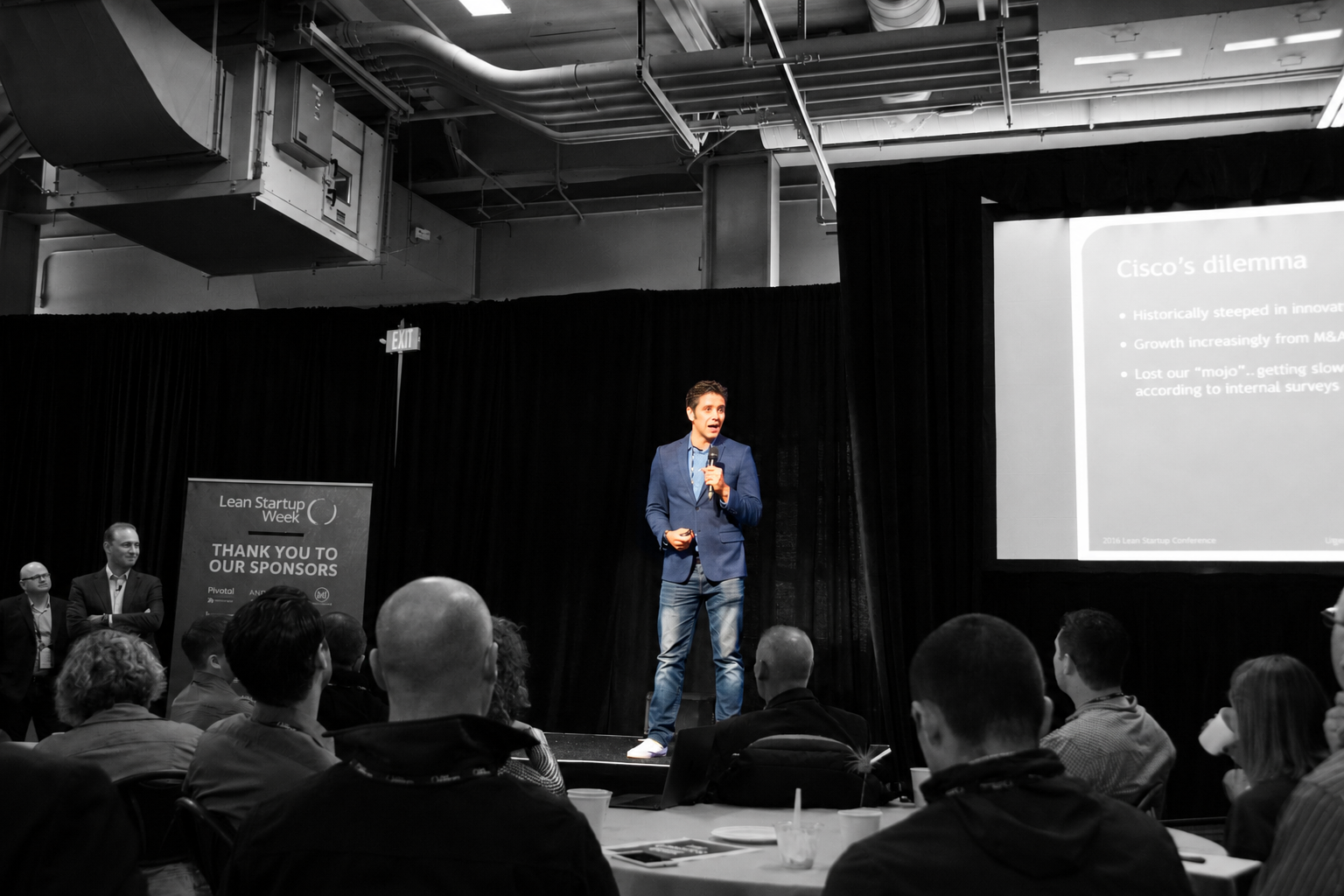
Keynote · San Francisco
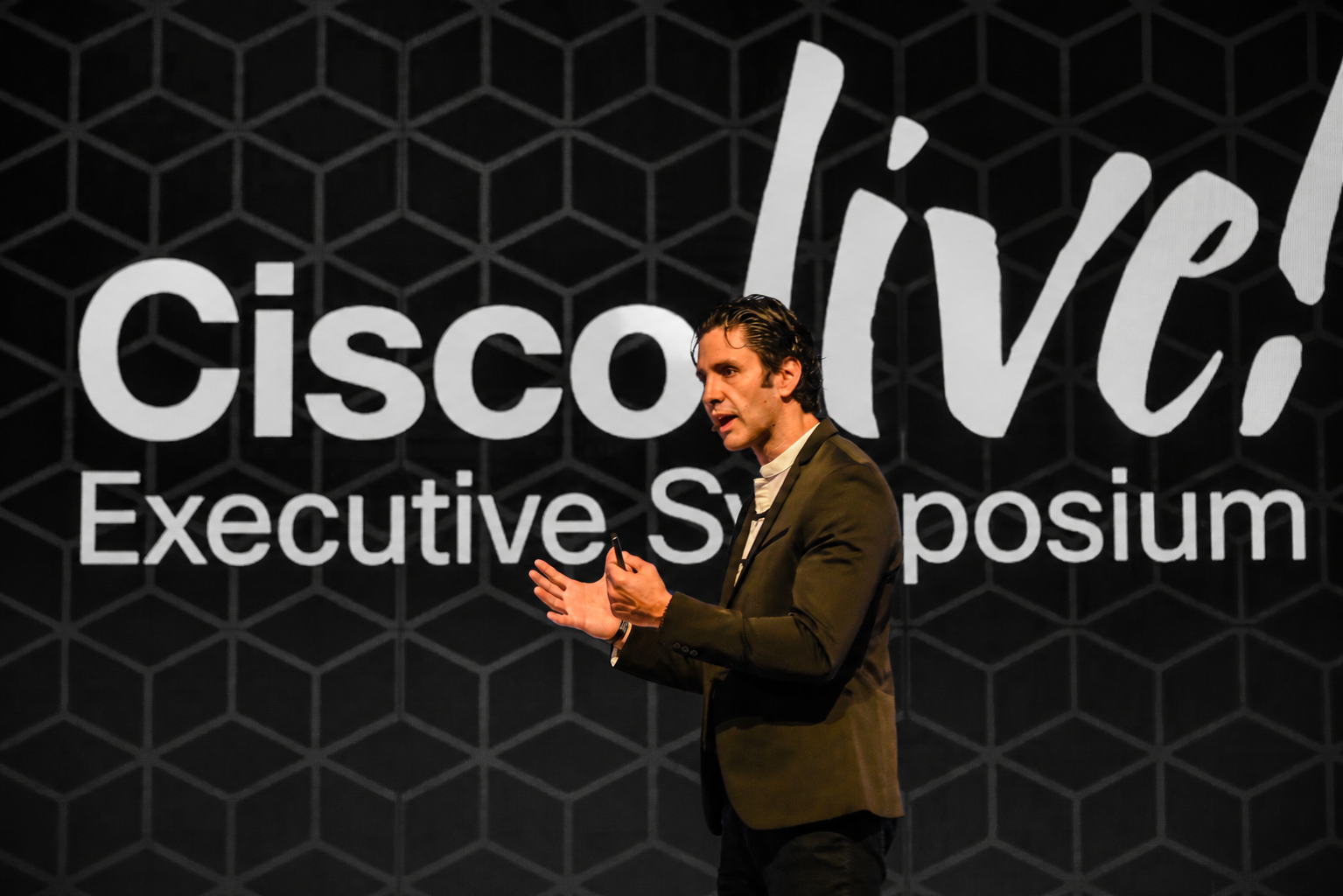
Strategy and innovation
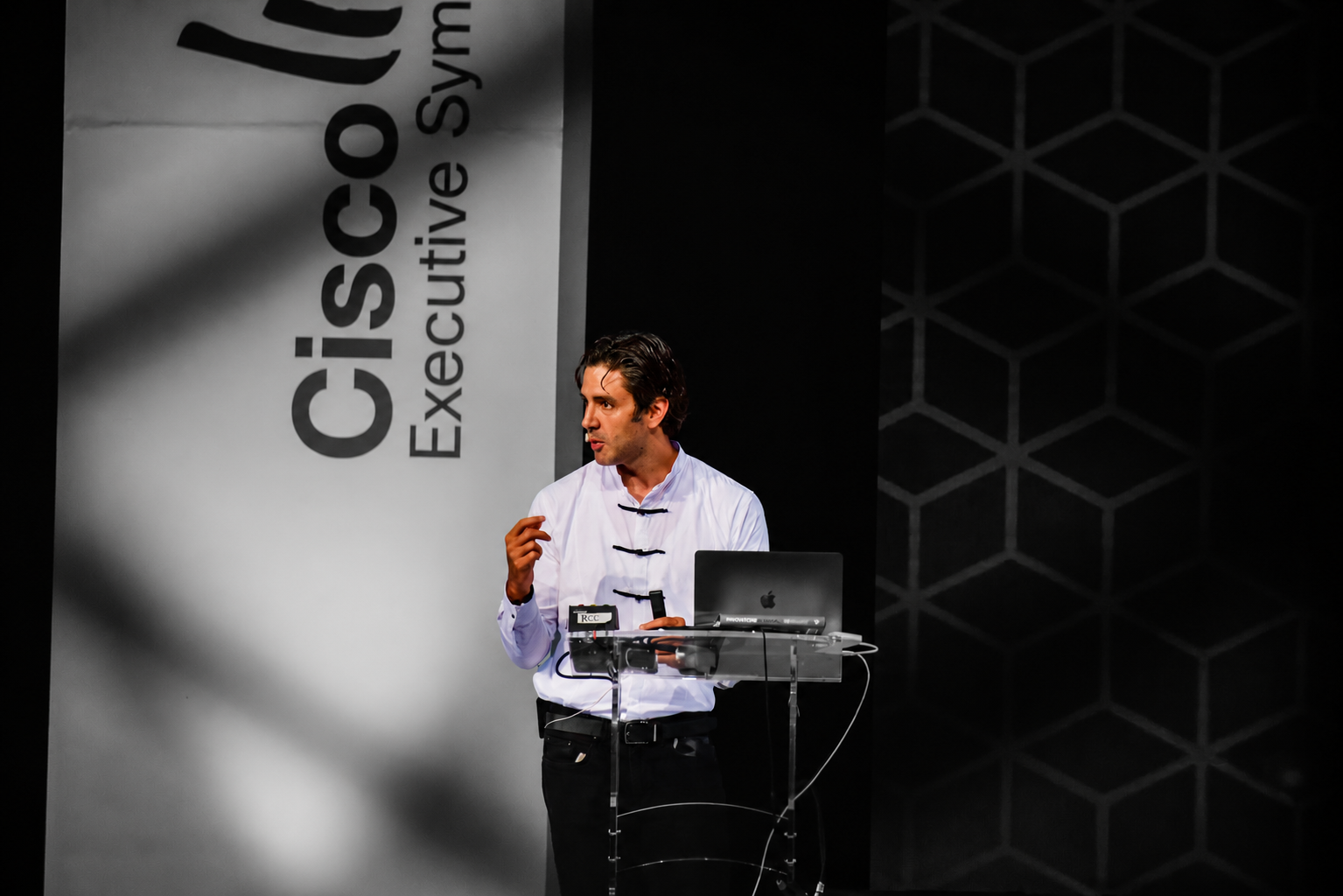
Workshop series
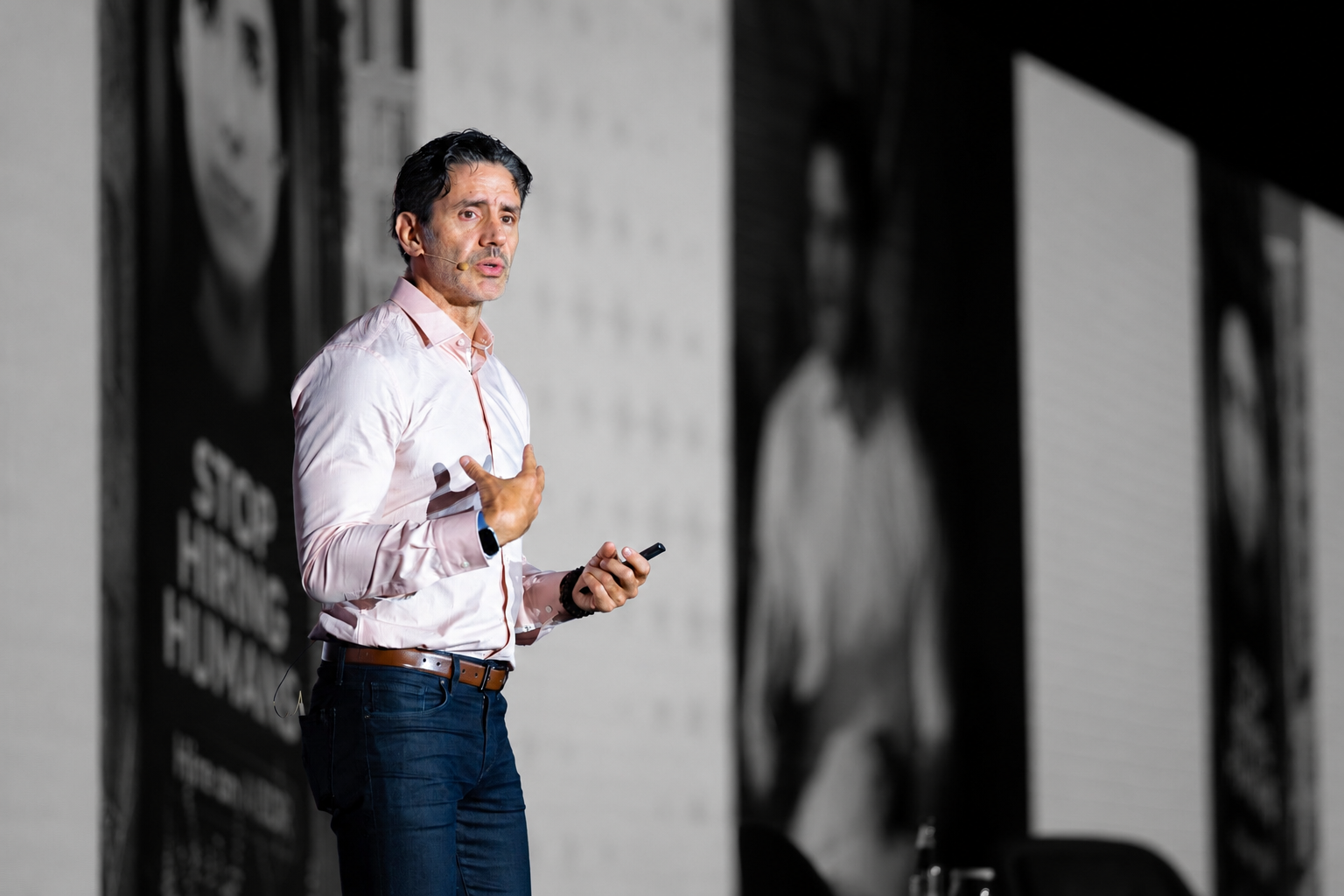
Keynote · Manila
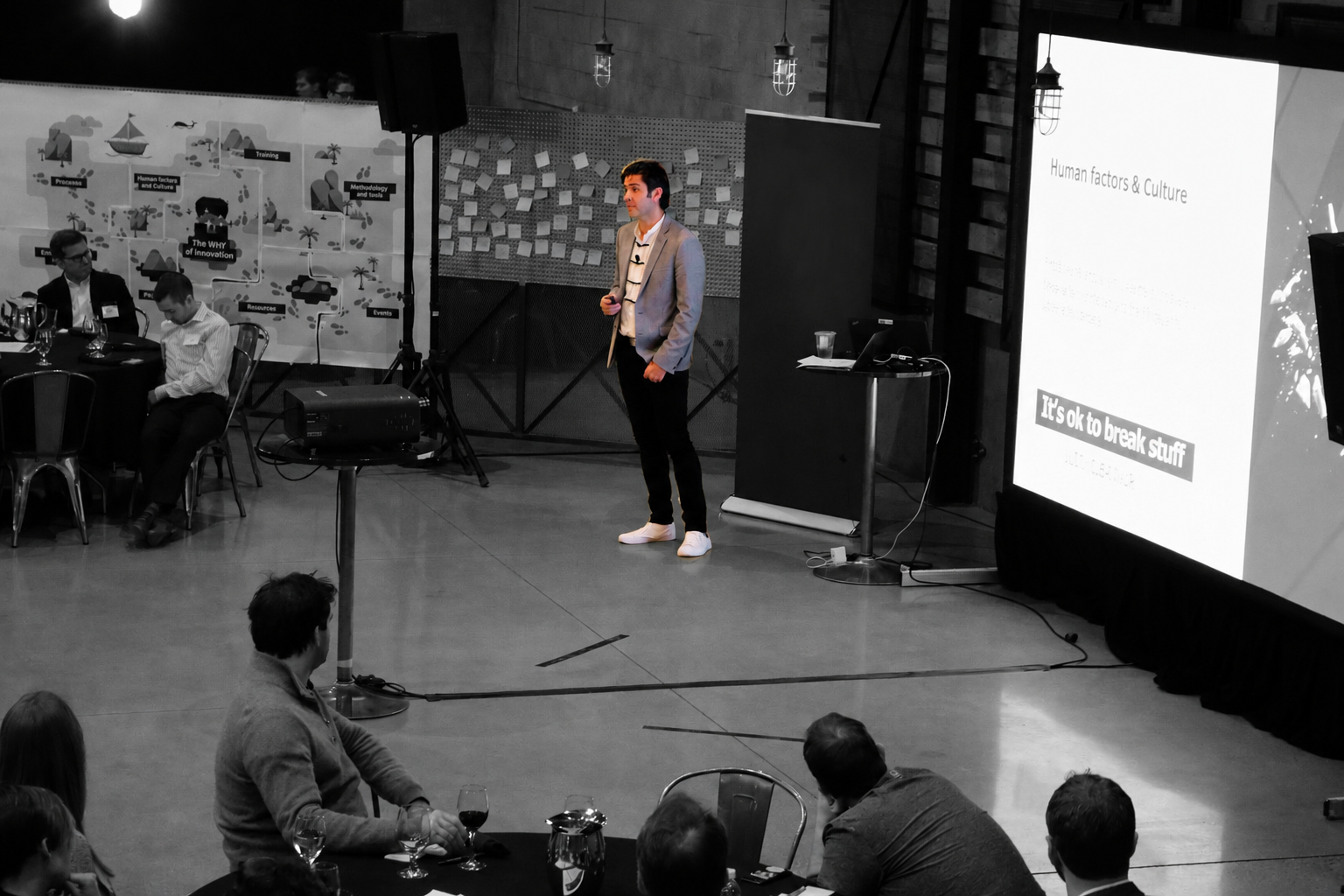
Workshop · innovation operators
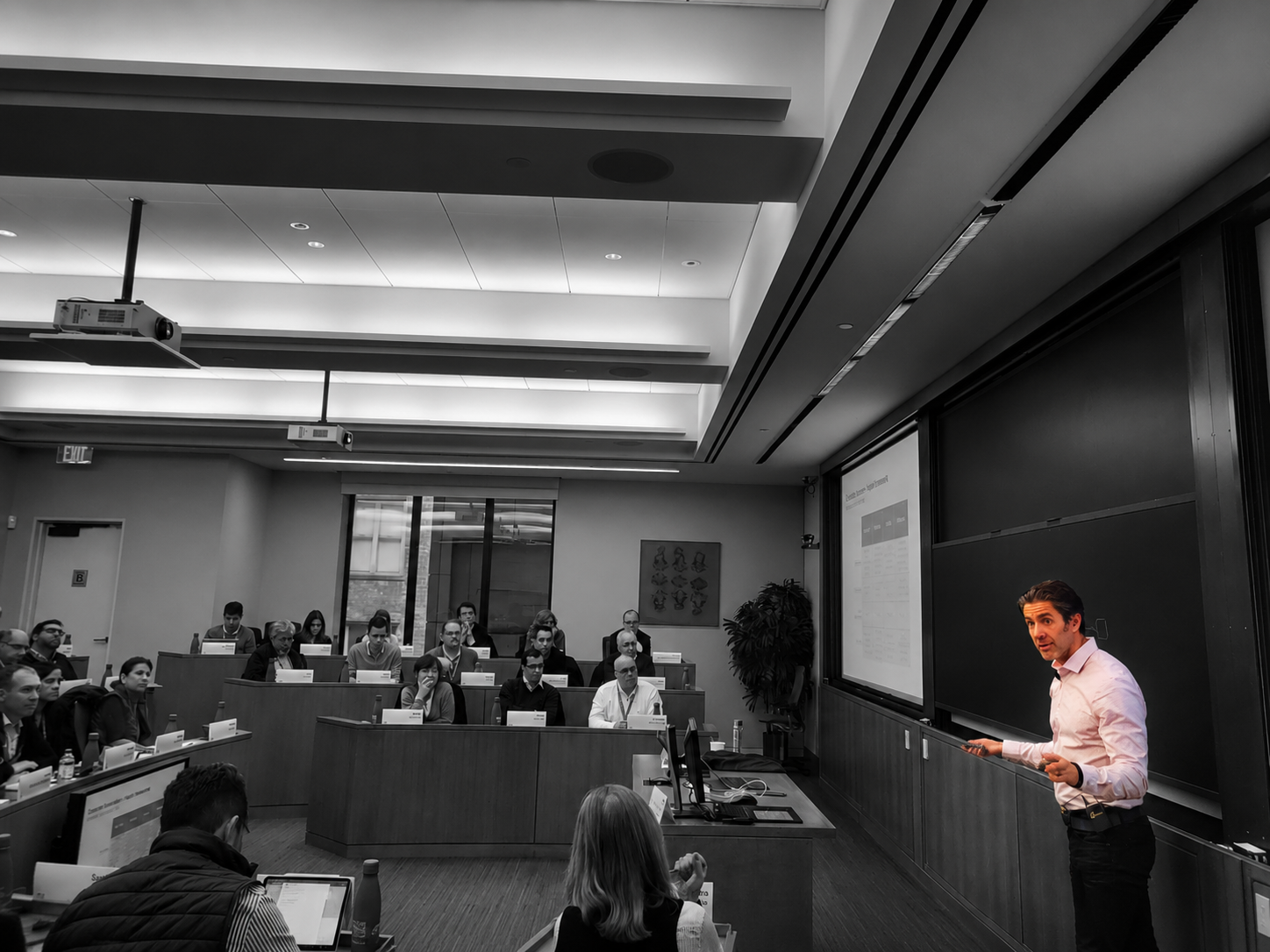
Classroom · New York
A sample of the keynotes I bring to a stage.
Each one can be tailored to your audience and re-cut as a workshop. Talk to me about the room you want me in.
The human preconditions for AI adoption.
Why AI lands in some teams and stalls in others.
Most AI rollouts fail not because the tools are wrong but because the human ground isn't ready. The four preconditions, the fear topology, and the leader-as-practitioner principle.
Corporate innovation in the age of AI.
Lead innovation from where you sit, in the AI era.
The corporate innovation map refreshed, Kasparov's Law applied to teams, and the structural moves that distinguish learning from theatre.
Psychological safety in the age of intelligent systems.
What changes about safety when judgment becomes the scarce skill.
For HR, culture, and L&D leaders. We rewrite the four conditions and design the rituals that move a culture from defensive to curious.
Children of the Three Experiments.
The newest challenges in human history for parents and schools.
Smartphones with social media, pandemic lockdowns, and now generative AI. What these three forces are doing to our kids — and what the adults are responsible for.
From curious user to capable practitioner.
Closing the gap between "I tried it once" and "I do my best work alongside it."
The capability ladder, the workflow audit, and the rhythm of working with AI as a colleague. Hands-on, role-by-role.
Behavioral innovation — lean and agile, applied to you.
Treat your own behavior with the discipline you bring to your product backlog.
The Habit Innovation Canvas and the Experiment Design Canvas. Why most well-being programs fail and what changes when behavior gets engineering rigor.
Talk to me about your event.
Engage me to speak →The lens that holds the rest together.
I trained as a Family Psychologist. I am no longer in clinical practice, but the lens never leaves you, and it is the spine of everything I do now. The same thing that decides whether a senior team's AI investment compounds or stalls is, in a different vocabulary, the same thing happening at the dinner table when a parent watches a twelve-year-old disappear into a phone. Same lens. Two stages of life.
I am a father to Khem and Sarak. They are the reason I write, build, and refuse to stop being curious about how human beings actually become themselves. They are also the audience I write hardest for.
Values Storybooks for Khem and Sarak
Illustrated stories from world traditions, drawn in tradition-true styles, teaching virtue across cultures. They get published once my kids approve of them.
Visit the project →Dialogues on Masculinity
A council of ten thinkers on what genuinely virtuous masculinity looks like, built for boys twelve to eighteen and the men raising them.
Visit the project →This is not a side hustle and it is not a brand decoration. It is the through-line. When I speak about technology and human formation, this is what I mean. If you are a parent, an educator, or a leader who cannot separate the two, this is the lens that will land for you.
For school leadership groups, parent communities, and family-first organizations.
Engage me to speak →